How to Remove Gel Nail Polish at Home Safely
How to remove gel nail polish at home with the acetone soak-off method: what you need, the steps, how long it takes, and the mistakes that thin your nails.
By the Beauty Sassy editors6 min read
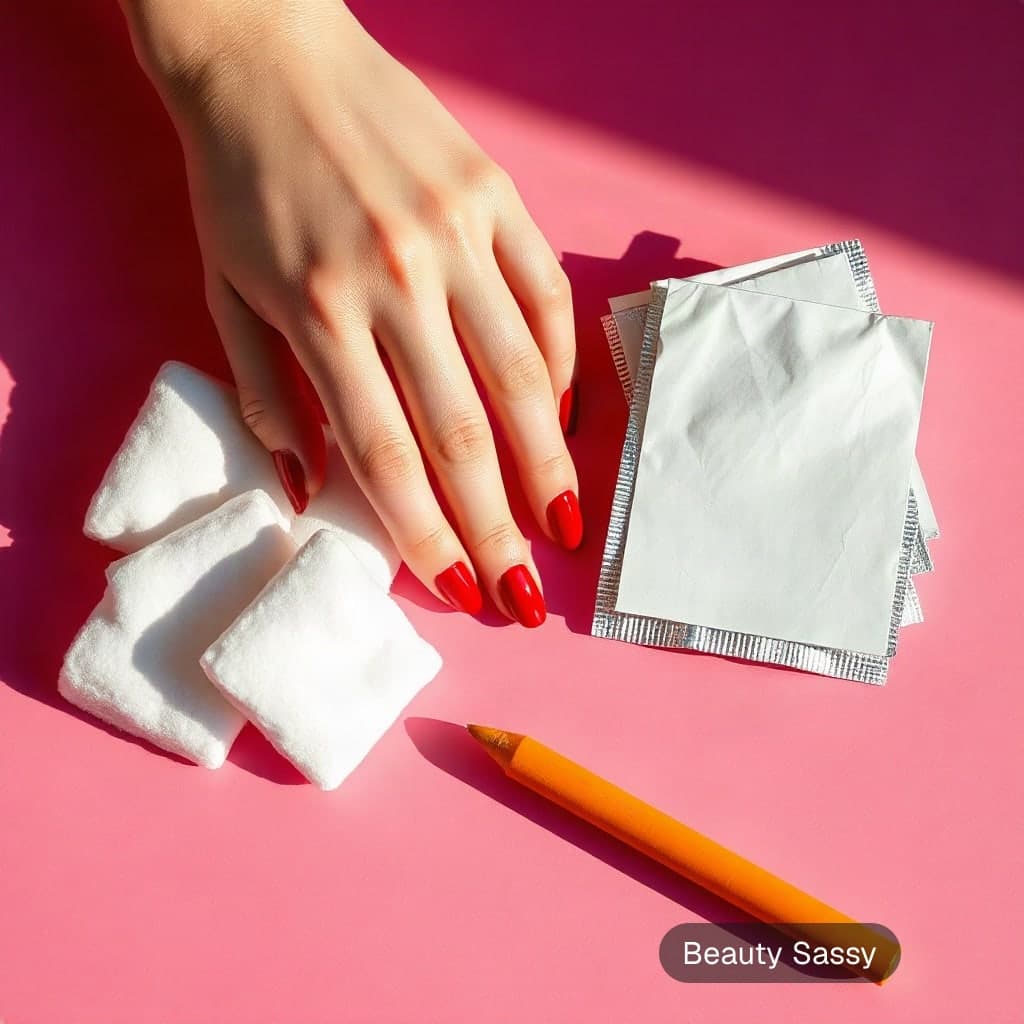
The safest way to remove gel nail polish at home is to file off the shiny top coat, soak the gel in pure acetone for 10 to 15 minutes, then gently push it away with an orange stick. Repeat until your nails are bare, and never peel or pry the gel off.
That is the short version. Below you will find the full method, what to gather first, how to tell if your manicure is even the soak-off kind, and how to look after your nails once the gel is gone.
What do you need to remove gel polish at home?
You need pure acetone, cotton, foil, a nail file, a buffer and an orange stick. Most of it is cheap and easy to find at a drugstore.
- 100 percent acetone. Regular nail polish remover is usually too weak to break down gel.
- Cotton pads or balls, cut into pieces about the size of your nail.
- Aluminum foil, cut into ten squares roughly 3 by 3 inches.
- A coarse nail file (around 180 grit) for the top coat, and a soft buffer for the end.
- An orange stick or cuticle pusher.
- Cuticle oil and a rich hand cream for afterward.
- Petroleum jelly or a thick balm to protect the skin around your nails.
How do you remove gel nail polish step by step?
Break the top coat, soak the gel in acetone under foil, then push it off in soft layers. Work on one hand at a time so you still have a free hand to help.
- Set up somewhere airy. Open a window and keep acetone well away from candles, the stove and any open flame, since it is highly flammable.
- File the top coat. Lightly file the surface of each nail until the shine is gone and it looks dull and matte. You only want to break the seal, not reach your natural nail.
- Protect your skin. Rub a thin layer of petroleum jelly or balm onto your cuticles and fingertips. Keep it off the nail itself, or the acetone cannot get through.
- Soak the cotton. Saturate a small piece of cotton with acetone and press it onto the nail.
- Wrap in foil. Fold a foil square snugly around the fingertip to hold the cotton in place and trap the acetone.
- Wait 10 to 15 minutes. Keep your hands warm. Warmth helps the acetone work faster.
- Check one nail. Remove a wrap. The gel should look lifted, wrinkled or gummy.
- Push gently. Use the orange stick to slide the softened gel off, moving from the cuticle toward the tip. If it resists, stop.
- Repeat as needed. Rewrap any stubborn nails for another 5 to 10 minutes rather than forcing them.
- Buff and clean. Smooth away small leftover bits with the soft buffer, then wash your hands with mild soap.
What is the warm acetone bowl method?
Instead of foil wraps, you soak your fingertips in a small bowl of acetone that sits inside a larger bowl of warm water. It can be quicker, but it puts more of your skin in contact with acetone.
Fill a bigger bowl with warm tap water, not boiling, and set a small glass or ceramic bowl inside it. Pour in just enough acetone to cover your nails. Never heat acetone directly in a microwave or on the stove. File the top coat first, balm your skin, then soak for about 10 minutes and push the gel off as above. Plastic bowls can soften or melt in acetone, so skip them.
How long does it take to remove gel polish at home?
Plan on 30 to 45 minutes for both hands. The soak itself is 10 to 15 minutes, but filing, rewrapping stubborn nails and cleanup add time.
Thick layers, glitter, chrome and dark shades often need a second soak. Rushing is where most damage happens, so give yourself a quiet evening rather than ten minutes before you head out.
How can you tell soak-off gel from hard gel or extensions?
Soak-off gel softens and wrinkles after 10 to 15 minutes in acetone. Hard gel, builder gel and most extensions barely change, and those need careful filing or a trip to the salon.
- Soak-off gel polish is the thin, glossy color most salons use for a standard gel manicure. It responds well to the method above.
- Hard gel and some builder gels are designed to be filed off, not dissolved. If your nail tech built structure or length, ask what they used.
- Gel extensions and tips add length past your natural nail. Removing them at home without the right tools often tears the nail underneath.
- Dip powder and acrylic also soak in acetone, but they take longer and are thicker. A salon removal is often the gentler choice.
If you soak for 20 minutes and nothing has lifted, stop. That is a sign you are not dealing with soak-off gel.
Can you remove gel polish without acetone?
Mostly, no. Acetone-free remover, hot water, oil soaks and peeling tricks rarely dissolve gel, and they tend to leave you prying at the edges.
Some people loosen a chipped manicure with warm soapy water and oil, then lift the gel away. When that works, it usually means the gel was already detaching, and it often pulls up layers of nail with it. If you cannot use acetone, for example because of very sensitive skin, a salon is the safer bet. If you are not sure how your skin will react, patch test a little acetone on the inside of your wrist first.
What mistakes damage your nails during gel removal?
Peeling, prying and over-filing cause most of the damage. Gel bonds to the top layers of your natural nail, so pulling it off takes those layers with it.
- Peeling or picking. This leaves thin, white, bendy patches that can take months to grow out.
- Scraping hard with metal tools. Use gentle pressure and stop when the gel resists.
- Over-filing. Filing past the top coat into the color or your own nail weakens it.
- Skipping skin protection. Acetone strips natural oils and leaves skin dry, tight and sometimes cracked.
- Working in a closed room. The fumes can cause headaches and dizziness, so keep air moving.
How do you care for your nails after removing gel?
Rehydrate right away with cuticle oil and hand cream, keep nails short for a while, and consider a break between gel sets. Acetone is very drying, so this step matters.
- Massage cuticle oil into each nail and cuticle once or twice a day.
- Use a rich hand cream after washing. If your hands are already flaky, our guide to treating dry skin covers the basics.
- File nails short and smooth so weak tips do not snag and split.
- Wear gloves for dishes and cleaning.
- Give your nails a week or two bare, or wear regular polish, before your next gel set.
Once your nails feel strong again, you can plan your next color around the rest of your look. Our roundup of easy makeup looks is a good place to find a shade that ties it together, and our affordable makeup guide helps if you are building a kit on a budget.
Questions people ask
Can I use regular nail polish remover on gel?
Usually not well. Most regular removers have little or no acetone, so they barely soften gel. Pure acetone is what makes the soak-off method work.
Why is my gel not coming off after soaking?
The top coat may not have been filed enough, the foil may be loose, or your hands may be cold. Refile lightly, rewrap snugly and soak 5 to 10 minutes more. If nothing lifts after about 20 minutes, it may be hard gel and needs a salon.
Is acetone bad for your nails and skin?
Acetone is drying, but occasional, careful use is generally fine for most people. Use it in a ventilated space, keep it away from flames, protect your skin with balm and moisturize afterward. Stop if you notice burning, redness or a rash.
How often should I take a break from gel manicures?
There is no fixed rule. Many people find a week or two without gel between sets helps nails recover, especially if they look thin, peeling or white in patches.
Liked this makeup story?
Get the next one first
One email a week: new stories and the few products worth buying.