Eye Cream for Dark Circles: What Actually Works
The right eye cream for dark circles depends on the cause. Match ingredients to brown, blue, hollow or puffy under-eyes and set realistic goals.
By the Beauty Sassy editors7 min read
An eye cream for dark circles can fade brown pigment and calm morning puffiness, but it cannot fill a hollow or hide visible blood vessels overnight. The trick is to figure out which type of dark circle you have, then choose ingredients that target that cause.
Most people have a mix of two or more types. Here is how to tell them apart, what to put on your skin, and what a cream simply cannot do.
What causes dark circles under your eyes?
Dark circles usually come from one of four things: extra pigment, visible blood vessels, shadows from volume loss, or puffiness. Each one looks a little different and responds to different fixes.
- Pigmented (brown) circles. Extra melanin in the skin under the eye. Common in medium and deeper skin tones, and often runs in families. Sun exposure and rubbing make it darker.
- Vascular (blue or purple) circles. The skin under the eye is thin, so the blood vessels underneath show through. They often look worse when you are tired, congested or just waking up.
- Shadowing from hollows. With age, fat and bone under the eye shift, leaving a groove called the tear trough. Overhead light casts a shadow there. This is structure, not color.
- Puffiness. Fluid collects in the lower lid, often after salty food, alcohol, crying, allergies or a short night. The bag casts its own shadow underneath.
Try a quick test. Gently stretch the skin under your eye. If the color stays, it is likely pigment. If it lightens or turns bluish, vessels are involved. If it changes when you tilt your face toward a light, shadowing is the main issue. Knowing your undertone helps too, so check our guide to skin tones before you shop for concealer.
Which dark circles can an eye cream actually help?
Eye creams work best on brown pigmentation and mild puffiness. They help a little with thin, bluish skin over time, and they do very little for true hollows.
- Brown pigment: good odds of gradual improvement with brightening ingredients and daily sun protection.
- Puffiness: temporary improvement, usually lasting a few hours.
- Blue or purple vessels: modest improvement at best, mostly by supporting firmer skin over months.
- Hollows: a cream cannot replace lost volume. Concealer and good lighting help more.
Which eye cream ingredients help brown dark circles?
For pigmented circles, look for ingredients that slow melanin production, and pair them with sunscreen every day. Without sun protection, brightening ingredients are fighting a losing battle.
- Vitamin C is an antioxidant that can brighten dull, uneven tone. Gentler forms suit the eye area better than high-strength formulas. Our vitamin C serum guide explains the different forms.
- Niacinamide helps reduce the transfer of pigment to the skin surface and is usually well tolerated.
- Retinoids speed up skin cell turnover, which can help fade pigment and support thin skin over time. Choose one made for the eye area, start two or three nights a week, and stop if you get redness or flaking.
- SPF around the eyes protects against the UV light that deepens pigment. Many people skip this area, so make sure your sunscreen for face covers it. Tinted mineral formulas also help block visible light.
Which eye cream ingredients help blue or purple dark circles?
For vascular circles, the goal is to strengthen and plump the thin skin so less color shows through. Results are subtle and take months, so keep expectations modest.
- Retinoids may slowly improve skin thickness with consistent use.
- Peptides are short chains of amino acids that support firmness and bounce.
- Hyaluronic acid draws water into the skin, so it looks smoother and a bit less see-through for the day.
- Caffeine can briefly narrow surface vessels, so the area may look less dark for a few hours.
What helps puffy eyes and morning bags?
Caffeine and cold are your best quick fixes for puffiness. Both tighten the area temporarily while fluid drains away.
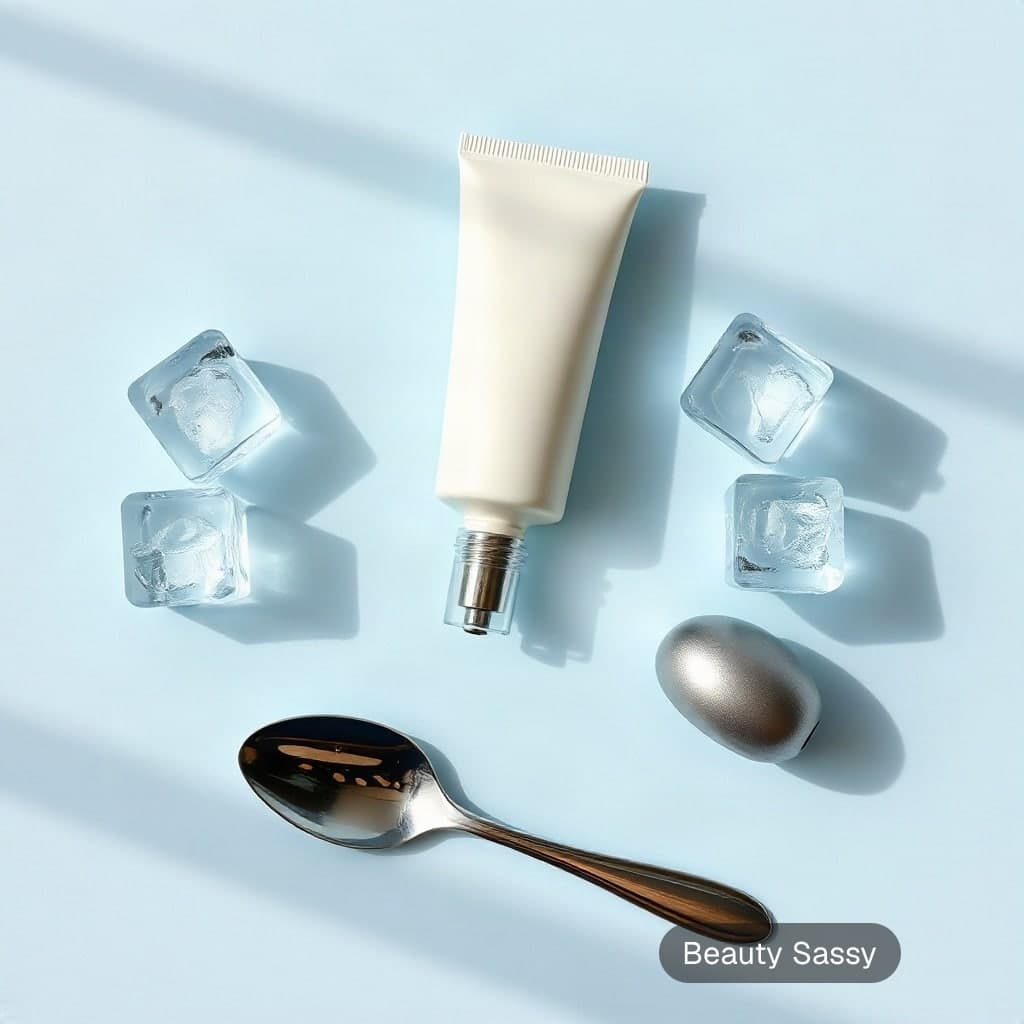
- Keep your eye cream or gel in the fridge and apply it cold.
- Choose a formula with caffeine, and tap it on gently from the inner corner outward.
- Hold a cool, clean spoon or a cold damp cloth over closed eyes for a minute or two.
- Sleep with your head slightly raised if you often wake up puffy.
How do you apply eye cream correctly?
Use an amount about the size of a grain of rice for both eyes, pat it on with your ring finger, and keep it on the orbital bone rather than right at the lash line. Product spreads toward the eye on its own.
- Cleanse and pat your face dry.
- Apply thin serums first, then eye cream, then moisturizer. For more on order, see how to layer skincare.
- Squeeze out a rice grain amount and split it between your two ring fingers.
- Dot it along the bone under each eye, from the inner to the outer corner.
- Pat gently until absorbed. Do not rub or tug.
- In the morning, finish with sunscreen around the eye area.
Your ring finger is naturally the weakest, so it puts the least pressure on delicate skin. Use the cream morning and night, and give it eight to twelve weeks before you judge it.
Which lifestyle habits make dark circles worse?
Poor sleep, allergies, rubbing your eyes and sun exposure all make dark circles more noticeable. Fixing these often helps as much as any cream.
- Sleep: aim for a steady bedtime. Short sleep makes skin look paler, so vessels and shadows stand out.
- Allergies: congestion can make the under-eye area look darker. Treating allergies with your doctor's advice can soften the look.
- Rubbing: friction from itchy eyes or rough makeup removal can darken pigment over time.
- Salt and alcohol: both encourage fluid retention and morning puffiness.
- Smoking: it breaks down collagen and can leave skin thinner and duller.
- Sun: wear sunglasses as well as sunscreen to protect against pigment.
How do you cover dark circles with concealer and color correction?
Use a color corrector that cancels the shade of your circles, then a thin layer of concealer close to your skin tone. Less product looks more natural than one thick layer.
- Blue or purple circles on fair skin: a peach or pink corrector.
- Brown or purple circles on medium to deep skin: an orange or red corrector.
- Hollows: skip heavy coverage. Put a slightly lighter concealer only in the deepest part of the groove to lift the shadow.
- Puffiness: avoid shimmer on the bag itself, which draws attention to it. Conceal the shadow underneath instead.
Prep with your eye cream first so concealer does not settle into fine lines. For more ideas, browse our makeup looks.
What results can you realistically expect?
Expect softer, not gone. Pigmented circles may look lighter after two to three months of steady use plus sunscreen, while puffiness improves for hours rather than for good.
Vascular circles and hollows change the least with creams alone. Genetics play a big role, so some darkness may simply be part of how your face is built. If creams have not helped after a few months, a dermatologist can talk you through in-office options such as chemical peels, lasers or fillers.
When should you see a dermatologist about dark circles?
See a doctor or dermatologist if dark circles or swelling appear suddenly, affect only one eye, or come with other symptoms. These can point to issues a cream will not fix.
- Dark circles or swelling that show up suddenly or on one side only.
- Swelling with pain, redness, warmth, itching or changes in your vision.
- Puffiness that lasts all day or also shows up in your face, ankles or legs.
- A rash, scaling or irritation that does not settle after you stop a product.
Questions people ask
Does eye cream really work for dark circles?
It can, depending on the cause. Eye cream helps most with brown pigmentation and puffiness, and least with hollows or visible vessels. Consistent use for two to three months, plus sunscreen, gives it a fair test.
Can I use my face moisturizer under my eyes?
Often yes, if it is fragrance free and does not sting. Eye creams tend to be gentler and may include targeted ingredients like caffeine. Keep strong acids and high-strength retinoids meant for the face away from the eye area.
How long does eye cream take to reduce dark circles?
Puffiness can look better within minutes. Pigment usually takes eight to twelve weeks of daily use to fade. Thin, bluish skin can take several months to show even a small change.
Is caffeine or retinol better for dark circles?
They do different jobs. Caffeine gives a quick, temporary reduction in puffiness and vessel color, while a retinoid works slowly on pigment and skin quality. Many people use caffeine in the morning and a retinoid at night.
Liked this skincare story?
Get the next one first
One email a week: new stories and the few products worth buying.